Common Navigation Mistakes Tourists Make in Historic City Centers

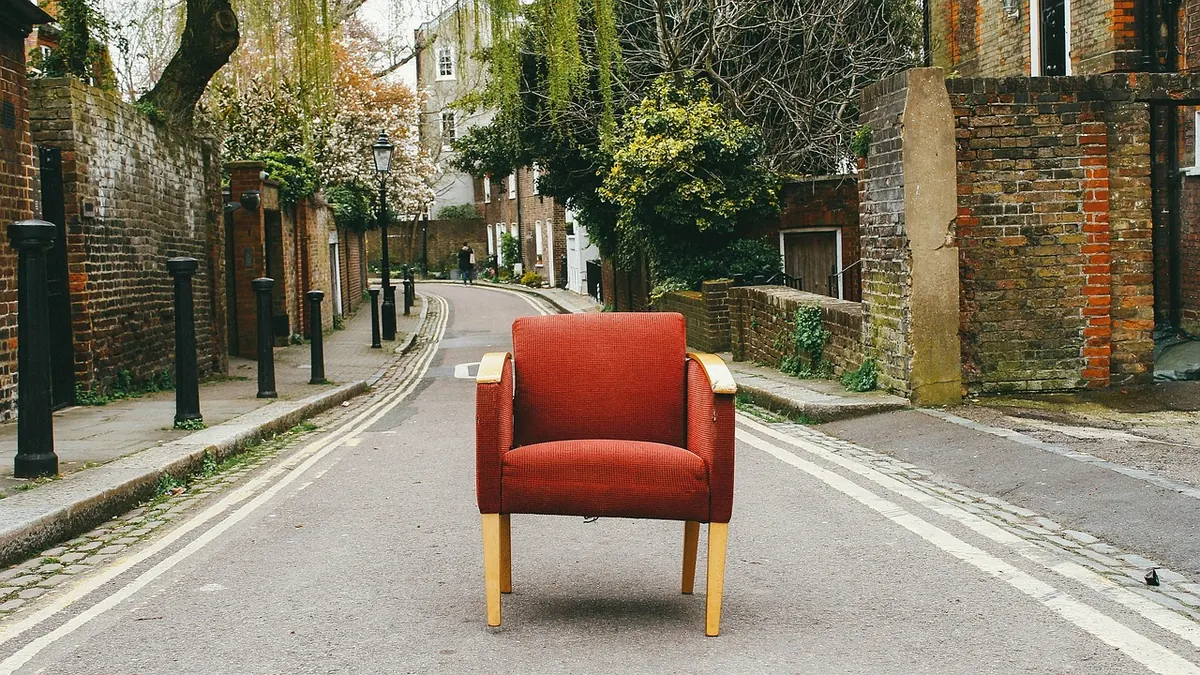
Nothing humbles a confident traveler faster than a medieval street plan. Your phone shows a tidy grid of possibilities; the reality is a tangle of lanes, arches, market squares and staircases that were never designed for anyone in a hurry. The good news is that most navigation disasters in old towns follow a handful of predictable patterns. Learn them and you will spend less time staring at a blue dot and more time looking at the city.
In narrow streets with tall stone buildings on both sides, your phone's position can drift by twenty or thirty meters — enough to put you in the wrong lane, or inside a wall. Signals bounce off facades; under arcades, porticoes and covered passages they may vanish altogether.
If the blue dot jumps, don't spin in place. Walk to the next junction or small square, stand still for a few seconds, and let the fix settle. Only then trust the compass arrow. Keep one hard reference in your head as well: the direction of the cathedral dome, the river, the hill, the station clock tower. A landmark that has been visible from the same spot for four centuries is more reliable than a signal that updates every second.
Two habits help. Before you enter a covered passage or a metro entrance, look at the route and memorize the next two turns. And when you are walking to a fixed destination, drop a pin at the door, not at the street.
Four hundred meters in a historic center is not four minutes. It is cobblestones that punish rolling suitcases, a group of forty following a raised umbrella, a delivery van reversing into a lane the width of your shoulders, and a flight of steps the map cheerfully renders as a street.
Plan in turns and landmarks, not minutes. “Left at the pharmacy, straight through the small square, right at the fountain” survives a closed street. “Eight minutes southwest” does not.
Hill towns hide their elevation in flat map symbols. A route that looks like a short hop may climb a staircase with no alternative, and a road may switch back three times to gain what reads as one block. Look for stair symbols, green spaces and the line of the old walls before you commit. If you are carrying luggage or walking with someone who tires quickly, the longer route around the outside is often faster and always kinder.
Many old centers restrict traffic to residents, deliveries and permit holders, enforced by cameras that read plates. The sign at the entrance may be small, half-hidden by a branch, and written in a language you do not read. The fine can reach you weeks later through your rental company, with an administration fee attached.
Practical rules:
A lane can run one way in the morning and open in both directions once deliveries finish. A square that is a road on Tuesday becomes a pedestrian zone on Saturday. And note this: a one-way system may push you half a kilometer past your turn, and the return leg is rarely the simple reverse.
Old towns are full of routes that look continuous on a map and end at a canal, a church apse, a private courtyard, or a gate that closes at dusk. Alley names change at every corner, sometimes twice within a hundred meters, so one physical street appears as three separate lines. In some towns, numbering follows the block rather than the street, which makes “number 14” a movable idea.
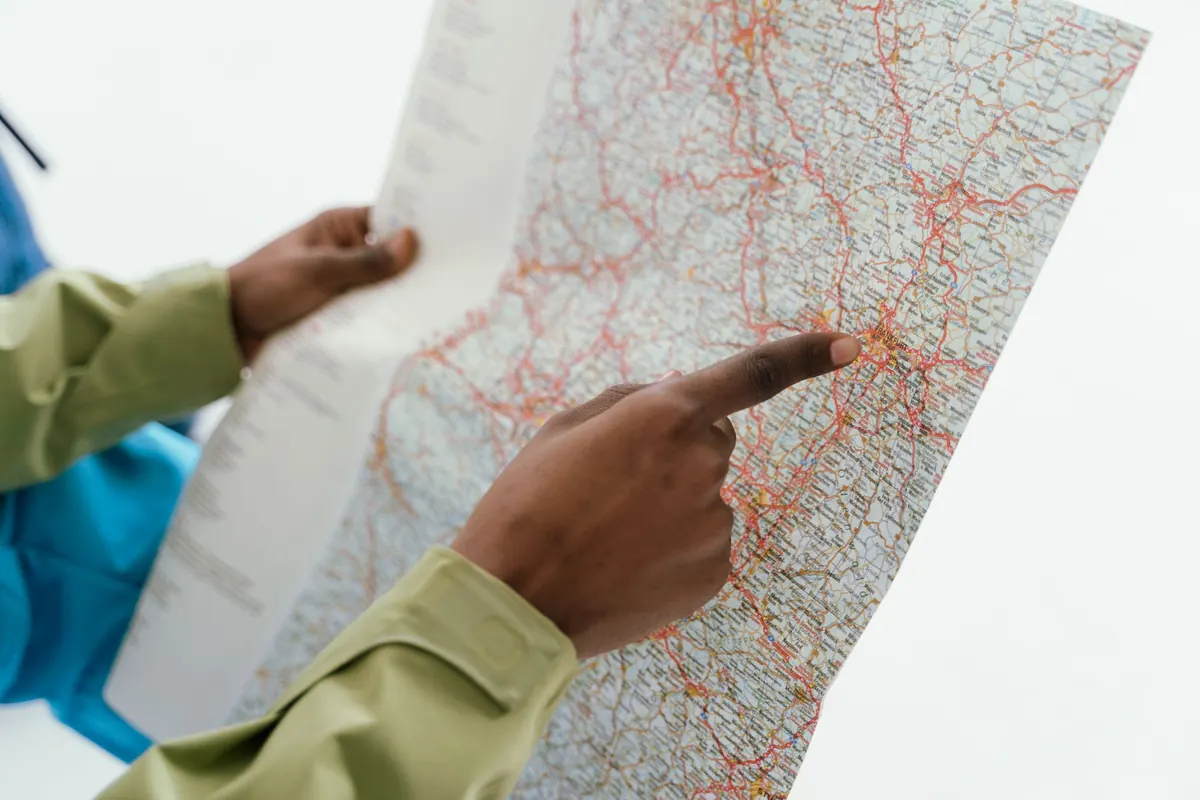
Before setting off, zoom in until building outlines appear and check the end of your route. Does the line stop at a passage? Is there a staircase? Then trace the alternative. A slightly longer route along a clear street is worth more than an elegant shortcut that dead-ends at someone's front door.
Cutting through a market square at the wrong hour means weaving between crates and vans. Cutting through a station or a department store to save a block works until the doors you came in by are locked from the other side, or the arcade shuts at eight. Park paths often close at dusk; a “footbridge” on the map may be a private pontoon; an archway may lead only to a residents' courtyard.
Be suspicious of routes that save distance but add decisions. Three clear turns beat eleven clever ones, especially in the evening, in the rain, with a tired group. If your app proposes a new route every time you pause, stop walking, look at the overview, and pick the version with the fewest choices.
A pin on a palace, church or museum often lands in the middle of a building the size of a city block. The door may be around the corner, up a ramp, or through a courtyard on the opposite side. Square addresses are worse: “Piazza del Duomo 3” can sit anywhere on the perimeter of a square that takes three minutes to walk around.
Most of these mistakes shrink to nothing with a small amount of preparation at the start of the day — and it takes less time than a coffee.
Old towns reward people who look up. The lanes will still be confusing — that is rather the point of them — but you will be confused in the right direction, and you will notice the city instead of arguing with it.
Photo: trilemedia / Pixabay
Previous Post
Beginner's Guide to Reading Transit Maps Without Getting Lost
Next Post
How to Save Offline Maps for a Remote Weekend Trip