Why Landmarks Make Poor Map Anchors and What to Use Instead
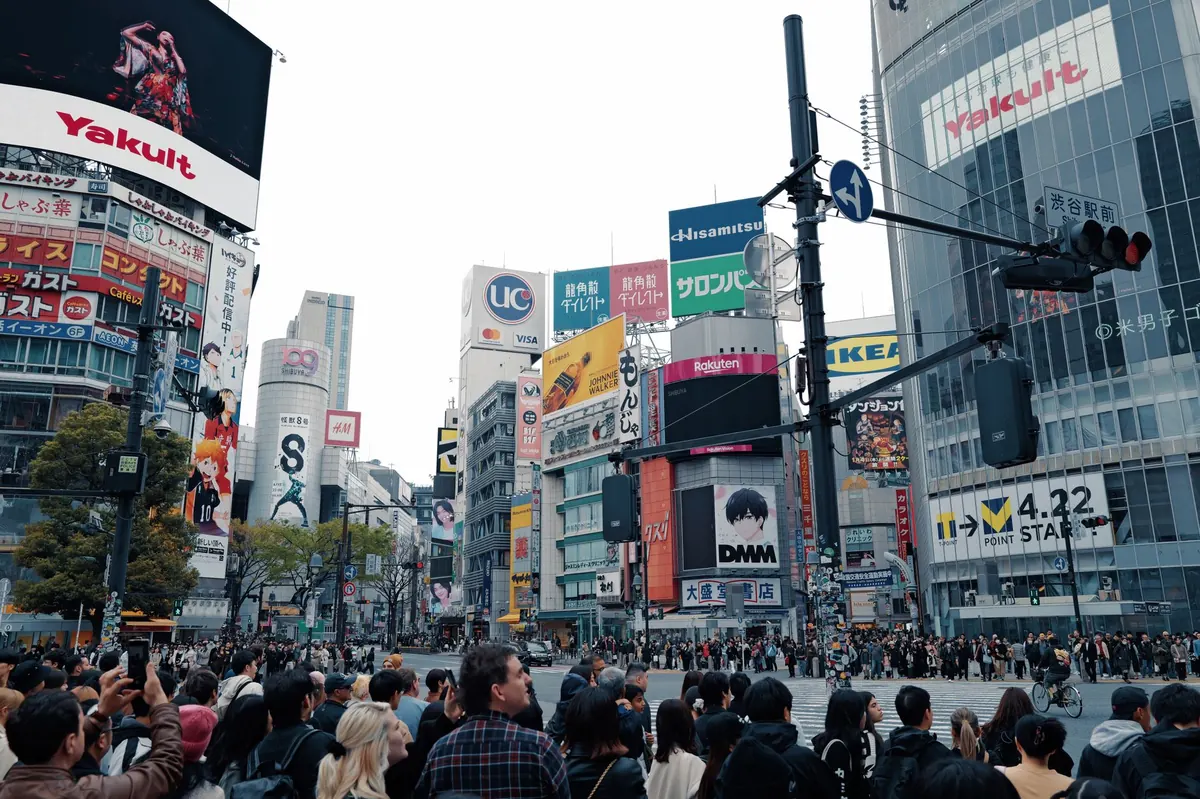
Ask two people to meet "by the cathedral" and watch what happens. One waits at the main doors, one at the side gate, a third stands by the steps where the buses stop, and a fourth gives up and waits in the square. The cathedral is the most visible object for a kilometre in every direction, and it is also one of the worst places in the city to pin a meeting.
That mismatch is worth taking seriously. Whether you are writing a walking route, dropping a pin for a neighbourhood map, or telling a visitor where your front door is, the landmark you reach for first is often the anchor that fails first. The reason is not that landmarks are bad. It is that they are being asked to do a job they were never suited for.
A landmark is excellent at confirming that you are in the right part of town. It is poor at telling you where to stop. In practice, the confusion on any journey clusters in the last hundred metres: which side of the building, which door, which corner, how far along the wall. Those are the questions people actually get wrong, and a landmark is exactly the wrong scale to answer them.
There is a second problem, and it is the one that catches mapmakers. A landmark is shared property. Everyone uses it, so it stops discriminating between one destination and another. If four cafés, a pharmacy and two flats all describe themselves as "near the station", then "near the station" has become a postal district rather than a direction.
Busy, famous places fail in a handful of predictable ways. Once you start noticing them, you will see the same patterns in every city.
Good anchors share a set of unglamorous qualities. They are small, fixed, visible from the direction someone is walking, and dull enough that nobody has bothered to change them.
Corners are the most underrated anchors in any city. "Turn left at the corner where the pharmacy sign sticks out" is precise, because a corner is a point rather than an area. Use the corner, then give one more step: the third doorway along, the gate with the green railings. Two small facts beat one large one.
Pin the entrance, not the middle of the building. If you are marking a venue on a map, place the pin on the door people will walk through and note the side of the street. This single change removes more confusion than any amount of extra description.
Named businesses work as anchors if you describe what they look like, because names change and signs do not. "The corner shop with the blue awning, opposite the postbox" survives a change of ownership. A brand name alone does not.
Bollards, postboxes, a row of plane trees, the point where cobbles become asphalt, a bus stop with a specific route number, a bench that faces the wrong way. These are unglamorous and stable, and they are exactly what people use when they are lost without admitting it.
Add a rough measure to every anchor: "about two minutes past the bakery, on the left". Keep it approximate rather than falsely precise, and phrase it as walking time rather than metres, because people judge distance by effort and landmarks rather than by numbers.
Residents use names that do not appear on any sign: the small square, the old market, the corner by the school. They are useful anchors, but only for people already half-familiar with the area. Use them as a bonus detail alongside a physical description, never instead of one.
One anchor is a pin. Three or four in sequence are a route. Build them like this:
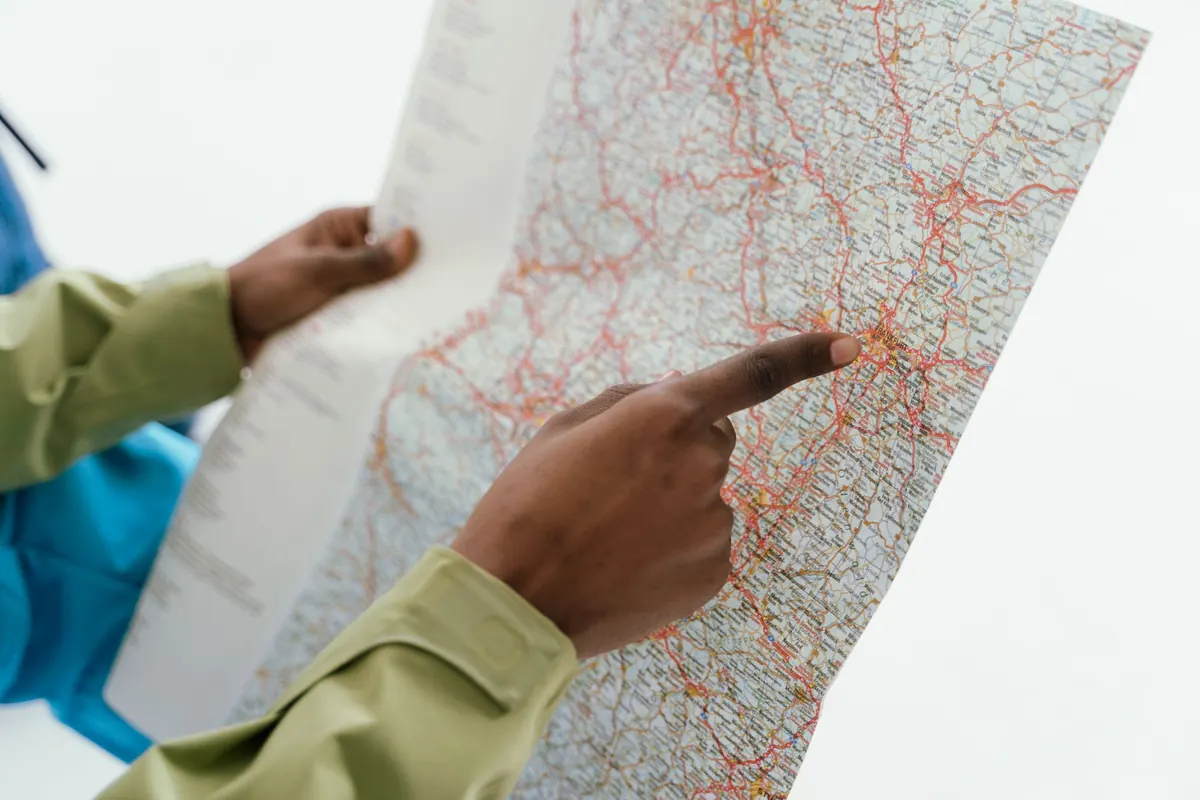
Maps carry the same problem in a different form. A pin dropped in the middle of a large landmark is technically correct and practically useless; it should sit on the entrance, offset to the correct side of the building, with a note about which street the door faces. Where a destination has several approaches, use more than one pin and label each by the street it serves. A single authoritative point often hides the fact that someone is arriving from the opposite direction.
It also helps to check your anchor at the resolution people actually use. Zoomed out, everything looks obvious. Zoomed in, you notice the destination sits behind a wall with no gate, or that the obvious approach is one-way for cars and closed to pedestrians after a certain hour.
Replace one landmark with one threshold. When you next send directions, write the door instead of the building, add the side of the street, and finish with a sentence that tells the reader what to do if they overshoot. For maps, move the pin to the entrance and add a second one for the other approach.
The test is simple and slightly humbling: could a stranger follow this at dusk, alone, without asking anyone? If the answer depends on a famous building being visible, in good weather, with no crowd in front of it, the anchor is doing the wrong job. Small, boring, permanent details are the ones that get people the last hundred metres.
Photo: Tony Wu / Pexels